The 10 Essentials of Hiking
There’s this version of hiking that looks effortless. Light pack. Clear skies. Back to the car before sunset. Everything controlled.
And then there’s the version that humbles you.
I learned that the hard way on the Appalachian Trail.
It wasn’t dramatic at first. It was just small things stacking up. I drifted off course without realizing it. My phone battery dropped faster than I expected. Then it died. The light started shifting. You know that late afternoon glow where everything feels calm but you suddenly realize you don’t have as much time as you thought?
I was low on water. I knew I was still several hours from where I should have been. And I remember standing there, very still, trying to do the mental math. Trying to convince myself I wasn’t actually lost.
That quiet moment where your stomach drops and you think, “Okay. This is on me.”
That’s a feeling you don’t forget.
Here’s the part that matters. I wasn’t reckless. I had the essentials in my pack. Not because I expected to need them that day, but because I’ve learned to respect the trail.
I found a water source and treated it. I had what I needed to put together a basic shelter. I didn’t have to wander in the dark or push through exhaustion trying to “beat the sunset.” I stopped. I breathed. I made a plan.
And I slept out there.
It wasn’t glamorous. It wasn’t some heroic survival story. It was humbling. It was quiet. It was a reminder that the outdoors will strip away your ego real quick.
The next morning, with daylight and a clearer head, I regrouped and got my bearings back. What could have spiraled into something dangerous didn’t, simply because I had prepared for the possibility.
That night changed something in me.
You don’t carry the 10 Essentials because you want to use them. You carry them because one day you might have to. They aren’t extra weight. They’re margin. They’re breathing room. They’re the difference between panic and patience.
Preparation isn’t fear. It’s respect. And if you spend enough time on the trail, you’ll understand exactly what I mean.
1. Navigation
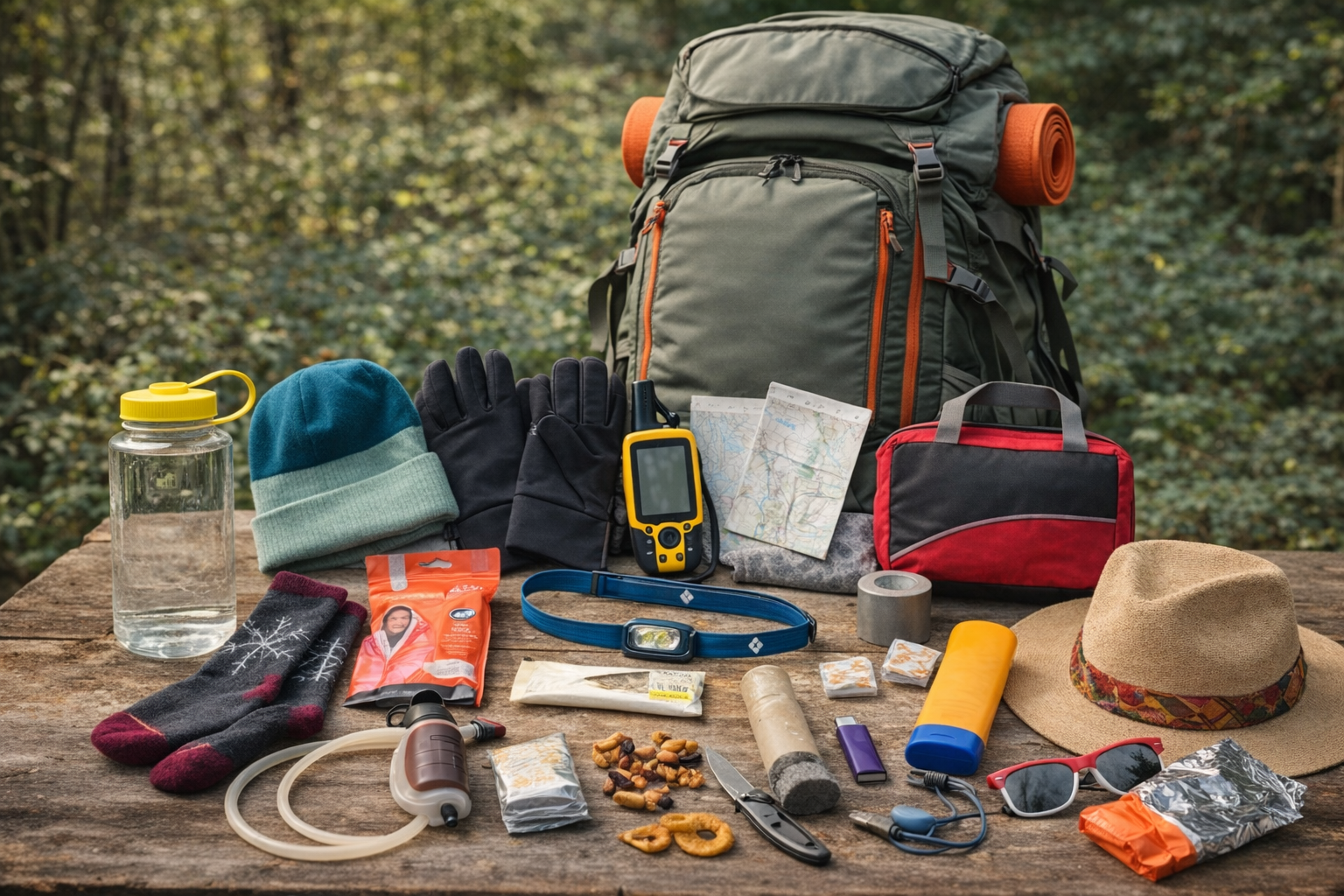
Yes, you have a phone. I do too. I also carry a downloaded map and I know the route before I go.
A physical map and compass are never a bad idea, especially if you’re somewhere remote. Know where you are. Don’t rely solely on cell service.
2. Sun Protection
Hat. Sunglasses. Sunscreen. Maybe a lightweight long sleeve.
Sun exposure drains you. It dehydrates you. It sneaks up on you.
Protect your skin. Protect your energy.
3. Insulation
Even if it’s warm when you start.
Weather shifts. Rain rolls in. Wind picks up. You get stuck longer than expected and your body temperature drops.
A lightweight layer weighs almost nothing. Not having it can ruin your day.
4. Illumination
Headlamp. Always.
Even if you swear you’ll be back before dark. Because if you’re not, navigating roots and uneven terrain in low light is no joke. Your phone flashlight is not a backup plan. Make sure that it is fully charged and have some extra batteries just in case.
5. First Aid
Blisters. Scrapes. Twisted ankles.
You don’t need a full trauma kit for a day hike, but you should have the basics. A small kit gives you options instead of panic.
6. Fire
This one surprises people.
Fire equals warmth and signal. Even if you never use it, having a lighter or waterproof matches is a simple layer of security. Personally, I always carry flint and steel, less chances of things going wrong and it is consistently reliable.
7. Repair Kit and Tools
Multi tool. Small knife. A little duct tape wrapped around your trekking pole or water bottle.
Gear fails. Laces snap. Packs rip. Small fixes keep small problems small.
8. Nutrition
Bring more than you think you need.
Food equals energy. Energy equals clear thinking. When you’re fatigued, everything feels harder. A couple extra snacks can completely shift your mood and performance.
9. Hydration
Water is not optional.
I always bring more than I think I’ll drink. On longer hikes, I carry a way to filter water if needed.
Dehydration is sneaky. Stay ahead of it.
10. Emergency Shelter
This doesn’t mean you’re planning to camp.
It means if something goes wrong and you’re stuck longer than expected, you have a way to protect yourself from exposure. A small emergency bivy or space blanket weighs almost nothing. But it could make a big difference.