The Best Apps for the Outdoors
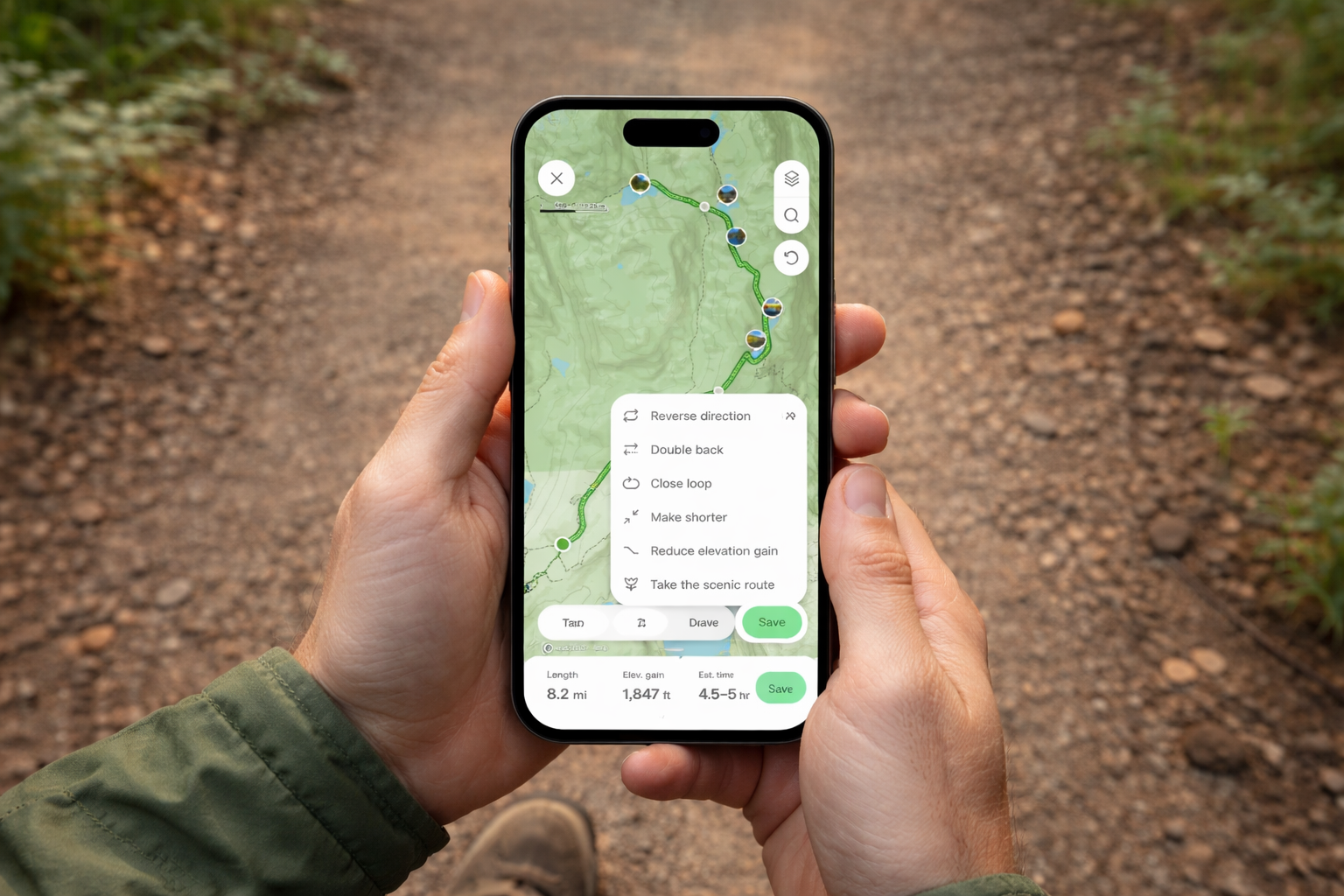
A lot of people think hiking apps are just about maps and trails. And yeah, those are important. But once you start spending more time outside, you realize the experience is bigger than that.
It’s finding new places. Knowing where you can camp. Identifying wildlife. Looking up at the night sky after a long day on the trail.
These are the apps I keep coming back to. Each one does something different, and together they cover just about everything I need when I’m out exploring.
AllTrails – Finding Trails & Getting Started
This is usually where it all starts.
AllTrails makes it incredibly easy to find hikes, especially if you’re exploring a new area or just looking for something quick and nearby. You get trail length, elevation, difficulty, plus real feedback from people who were just there.
I still use it all the time for discovering spots around Florida.
Where it shines:
Massive trail database
Real-world reviews and photos
Super beginner-friendly
Where it’s limited:
Not always reliable for deep backcountry navigation
Offline features require premium
Gaia GPS – Navigation & Going Off the Beaten Path
This is where things get more serious.
Gaia turns your phone into a legit navigation tool. Topo maps, satellite overlays, downloadable routes, all of it. If I’m going somewhere unfamiliar or more remote, this is what I trust.
Where it shines:
Detailed maps and layers
Reliable GPS tracking
Great for planning and recording routes
Where it’s limited:
Takes a little time to learn
Best features are behind a subscription
iOverlander – Finding Camps, Parking, and Hidden Spots
This one is underrated, especially if you’re doing road trips, van life, or just trying to find a place to crash for the night.
iOverlander is all user-submitted, which means you’ll find everything from legit campgrounds to random pull-offs and hidden gems.
Where it shines:
Great for campsites, parking, and off-grid spots
Works offline
Honest, community-driven info
Where it’s limited:
Quality can vary depending on the area
Not designed for trail navigation
iNaturalist – Learning What You’re Looking At
This is where hiking turns into something deeper.
You see a plant, a bird, a random bug on the trail, and instead of just walking past it, you can actually learn what it is. iNaturalist uses image recognition and a global community to help identify species.
It’s honestly one of the coolest ways to stay engaged with your surroundings.
Where it shines:
Identifies plants and animals
Builds a log of your observations
Connects you to a larger conservation community
Where it’s limited:
Requires a signal for best results
IDs aren’t always perfect
SkyView – Looking Up After the Hike
This is the one people don’t expect, but it might be my favorite.
After a long day outside, especially if you’re away from city lights, the sky becomes part of the experience. SkyView lets you point your phone up and instantly see constellations, planets, satellites, all of it.
It turns a quiet night into something memorable.
Where it shines:
Simple and really fun to use
Great for learning constellations
Works well even for beginners
Where it’s limited:
Not essential for hiking itself
Best in low light pollution areas
Final Thoughts
At some point, I stopped thinking of these as “apps” and started thinking of them as tools that quietly support the experience without taking it over.
They help you find the trail, stay on it, understand what you’re seeing, and settle into moments you might have otherwise missed. But they’re not the point.
The point is still the same as it’s always been. Getting outside. Moving your body. Clearing your head. Noticing things again.
The goal isn’t to be glued to your phone out there. It’s to use it just enough that you feel more confident, more aware, and more connected to where you are.
And when you hit that balance, that’s when the outdoors really starts to open up.