How I’m Breaking In Boots and Trusting My Feet
If there’s one thing I’ve learned over years of hiking and training, it’s that your feet end up running the show. You can be in great shape, dialed in mentally, and still have a miserable day if your footwear isn’t right. That’s why breaking in boots before a big trek isn’t optional for me. It’s part of the process.
Boots don’t just need to fit. They need to work with you. They need to flex where your foot flexes, stay stable when you’re tired, and feel predictable when you’re hours into a long day. You don’t figure that out in a store or by wearing them around the house for ten minutes.
Why Breaking In Boots Actually Matters
For me, breaking in boots isn’t really about “softening them up.” It’s about learning how my body and that specific shoe behave together over time. That’s when hot spots show up. That’s when pressure points become obvious. That’s when you realize socks actually matter.
I want all of that information before I’m days into a trek at altitude.
Breaking them in looks like:
Long walks at an easy pace
Incline treadmill sessions with gradual increases
Rucking with weight to see how they feel under load
Paying attention to how my feet feel later that day and the next morning
If something feels slightly off early on, it almost never fixes itself magically later. I’ve learned that the hard way more than once.
How I Narrowed Down My Boot Options
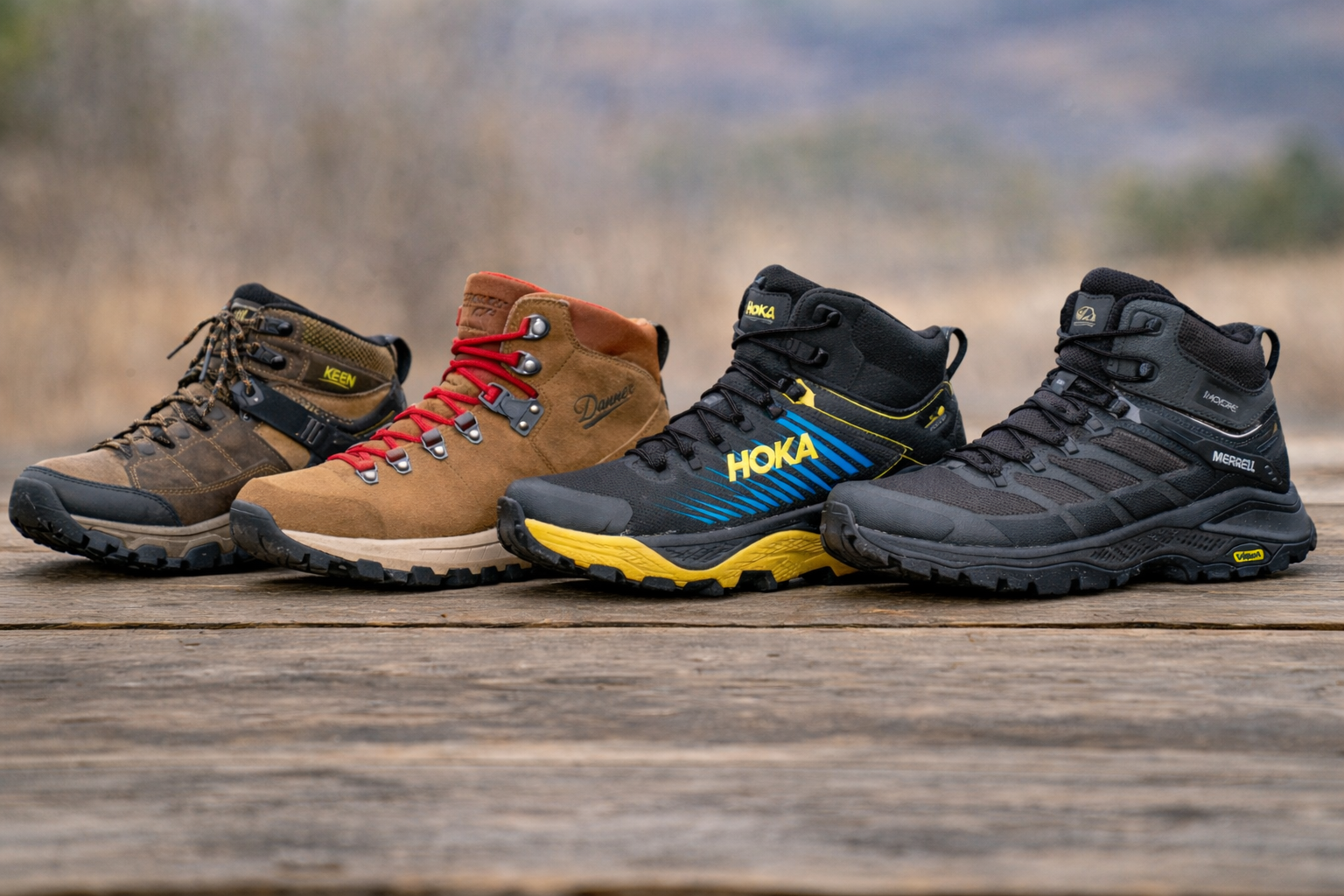
I took my time with this choice because it matters. I thought about the terrain I’ll be on, the pace of the trek, how my feet behave over long days, and the tradeoffs between stiffness, weight, support, and breathability. I wanted something more supportive than a trail runner but not as bulky as a heavyweight mountaineering boot.
Here were the main contenders I tried or seriously considered:
Keen Targhee
Solid beginner-friendly boot with a roomy toe box. Comfortable out of the box. The roominess was nice, but it didn’t have the support or traction confidence I wanted for extended days with a pack.
Danner Mountain 600 GTX
Great build quality and comfort. Feels like an old-school, reliable boot with decent support. A little heavier than I wanted for daily training and long days on rocky sections. I liked them, but they weren’t the right balance for what I need.
Hoka Speedgoat 6 Mid GTX
Super comfortable and surprisingly capable on technical terrain. Very light and cushioned. I loved how they felt on short to medium days, but I wasn’t totally sold on how they handled long, uneven terrain under load. They performed great, but I wanted something with just a bit more underfoot stability for the trek.
Merrell Moab Speed 2 Mid GTX
This is the one I went with. It felt like the Goldilocks option—right in the sweet spot between stability, weight, and flexibility. It feels light and responsive without being flimsy. It moves naturally with my foot instead of fighting it.
Why I Chose the Merrell Moab Speed 2 Mid GTX
I ultimately picked the Merrell Moab Speed 2 Mid GTX because it struck the balance I was looking for. It feels supportive without feeling bulky. It doesn’t try to be a mountaineering boot, yet it still gives me confidence on uneven, rocky terrain. That’s the balance I need for a long-distance trek where I’m not running technical rock faces, but I am putting in long days under load.
The fit was right quickly, which is always my first check. No pinching or weird pressure points. Just a secure, comfortable feel. Traction feels solid without feeling overly aggressive, and the waterproofing gives me peace of mind without turning the shoe into a sauna.
Most importantly, they feel predictable. I don’t want to think about my feet all day. I want them to quietly do their job while I focus on pacing, breathing, and staying present.
How I’m Breaking Them In
I’m not babying these boots, but I’m also not trying to destroy them. I’m building trust over time.
Long walks at an easy pace
Incline treadmill sessions around 10 to 12 percent
Rucks with gradually increasing weight
Wearing the same socks and pack setup I plan to use on the trek
I’m paying attention to the small things: how they feel after an hour, how they feel after two, whether my feet feel beat up the next day or totally fine. So far, everything’s lining up the way I hoped.
Trust Comes From Time
At the end of the day, trusting your feet isn’t about brands or what gear list you follow. It comes from repetition. From showing up again and again and knowing that when things get uncomfortable, your footwear isn’t what takes you out of the moment.
I don’t need these boots to be perfect. I just need them to be reliable. The more time I spend in them now, the less mental energy I’ll waste thinking about my feet when it actually matters.